Contents
- 1 AEO (Answer Engine Optimization): The Definitive Guide for AI-Era SEO
AEO (Answer Engine Optimization): The Definitive Guide for AI-Era SEO
Key Takeaways
- AEO is the new frontier: As AI search engines like Gemini, ChatGPT, and Perplexity gain market share, traditional SEO must evolve into Answer Engine Optimization.
- Structured data is critical: Schema markup, clean table formatting, and clear Q&A styling are the primary ways AI engines extract data.
- Brand authority overrides volume: AI engines prioritize high-trust sources with verified brand signals over generic content farm pages.
The Paradigm Shift: From Search Engines to Answer Engines
The digital marketing landscape is undergoing its most significant disruption since the inception of the commercial web. For decades, Search Engine Optimization (SEO) focused on keyword matching, backlink profiles, and click-through rates to rank webpages on traditional Search Engine Results Pages (SERPs). However, the rise of Large Language Models (LLMs) has birthed a new category of technology: Answer Engines.
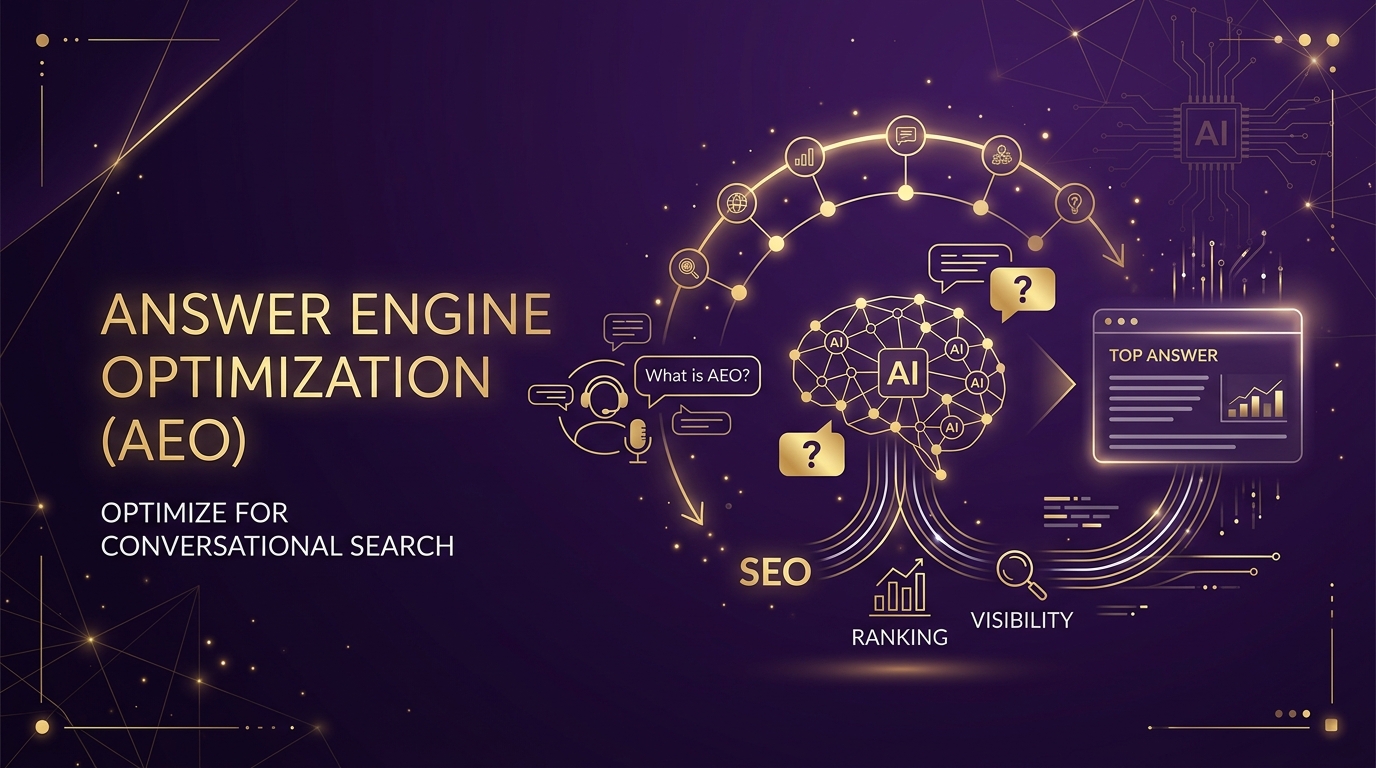
Platforms like Google’s Search Generative Experience (SGE/Gemini), OpenAI’s SearchGPT, and Perplexity AI do not simply return a list of links. Instead, they synthesize information from multiple web sources to present a single, direct, conversational answer. Consequently, marketers must pivot their focus from ranking in the top ten search results to becoming the synthesized source within the AI-generated answer. This shift is known as Answer Engine Optimization (AEO).
Understanding the Architecture of AI Answer Retrieval
To optimize for answer engines, one must understand how they collect and synthesize information. Unlike traditional search crawlers that build index repositories based on page relevance, answer engines utilize Retrieval-Augmented Generation (RAG). The RAG process consists of three main stages:
- Query Transformation: The engine converts conversational queries (e.g., “what is the best budget tool for local SEO in Trichy?”) into machine-readable search vectors.
- Retrieval: The model queries the web to pull a set of highly relevant, authoritative text chunks.
- Synthesis: The LLM reads the retrieved chunks and writes a cohesive summary, appending inline citations back to the source sites.
To ensure your content is selected in the Retrieval phase, it must be structured in a way that LLM crawlers can easily parse, segment, and digest.
SEO vs. AEO: Key Tactical Differences
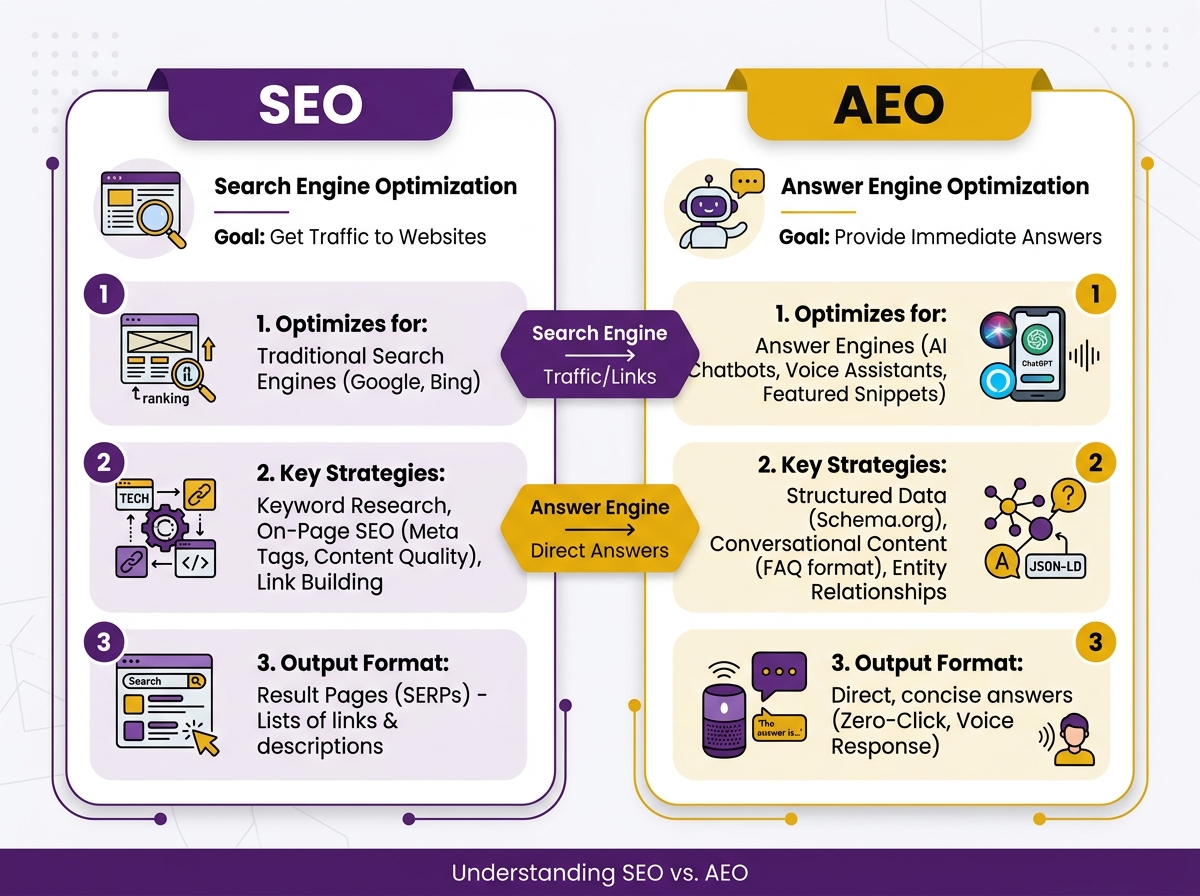
While AEO does not replace traditional SEO, it builds upon it with different priorities. The following table summarizes the fundamental shifts in strategy:
| Metric / Strategy | Traditional SEO | Answer Engine Optimization (AEO) |
|---|---|---|
| Primary Goal | Rank in top 10 positions for traffic. | Be cited as the source in AI summaries. |
| User Query Intent | Short, keyword-based search queries. | Long, conversational, question-based. |
| Content Structure | Long-form, comprehensive paragraphs. | Q&A blocks, tables, structured lists. |
| Optimization Focus | Keyword density, tags, backlinks. | E-E-A-T, Schema markup, facts database. |
Step-by-Step AEO Implementation Strategy
To prepare your website for answer engines, execute the following four-step process:
1. Implement Question-Based Content Hubs
Conversational search queries are naturally framed as questions. Your content must include direct, concise answers (typically 40-60 words) immediately following header tags formatted as questions. This structural layout makes it easy for RAG algorithms to pick up your answer and cite your page.
2. Deploy Extensive Schema Markup
Schema markup (JSON-LD) acts as the semantic translator for search spiders. Use FAQPage, Product, Organization, and LocalBusiness schemas to define your content explicitly. This reduces the cognitive load on the LLM’s parsing pipeline, making your data more attractive for synthesis.
3. Optimize for E-E-A-T (Experience, Expertise, Authoritativeness, Trustworthiness)
AI models are trained to avoid hallucination and disinformation. They heavily weight signals of authority and brand trust. To boost E-E-A-T, always publish under verified author names (e.g., Rakshith at Digital Marketer Trichy), include client testimonials, and cite trusted external publications.
Frequently Asked Questions (FAQ)
What is AEO in digital marketing?
Answer Engine Optimization (AEO) is the process of optimizing web content to ensure it is selected and cited as a source by AI-powered search engines and answer assistants like Gemini, ChatGPT, and Perplexity when they generate direct responses to user questions.
How does AEO differ from traditional SEO?
While traditional SEO optimizes pages to rank in search results for user clicks, AEO focuses on content structure, clear question-answer blocks, schema data, and brand trust to ensure content is digested and displayed within synthesized AI answers.
What schema types are most important for AEO?
The most important schema markups for AEO are FAQPage, QAPage, Product, Organization, and LocalBusiness, as they provide clear structural cues that allow AI models to verify facts and pull direct answers.